Machine Calling: Please Answer
We were afraid AI would become dangerous. The stranger possibility is that it may notice danger before anyone else does.
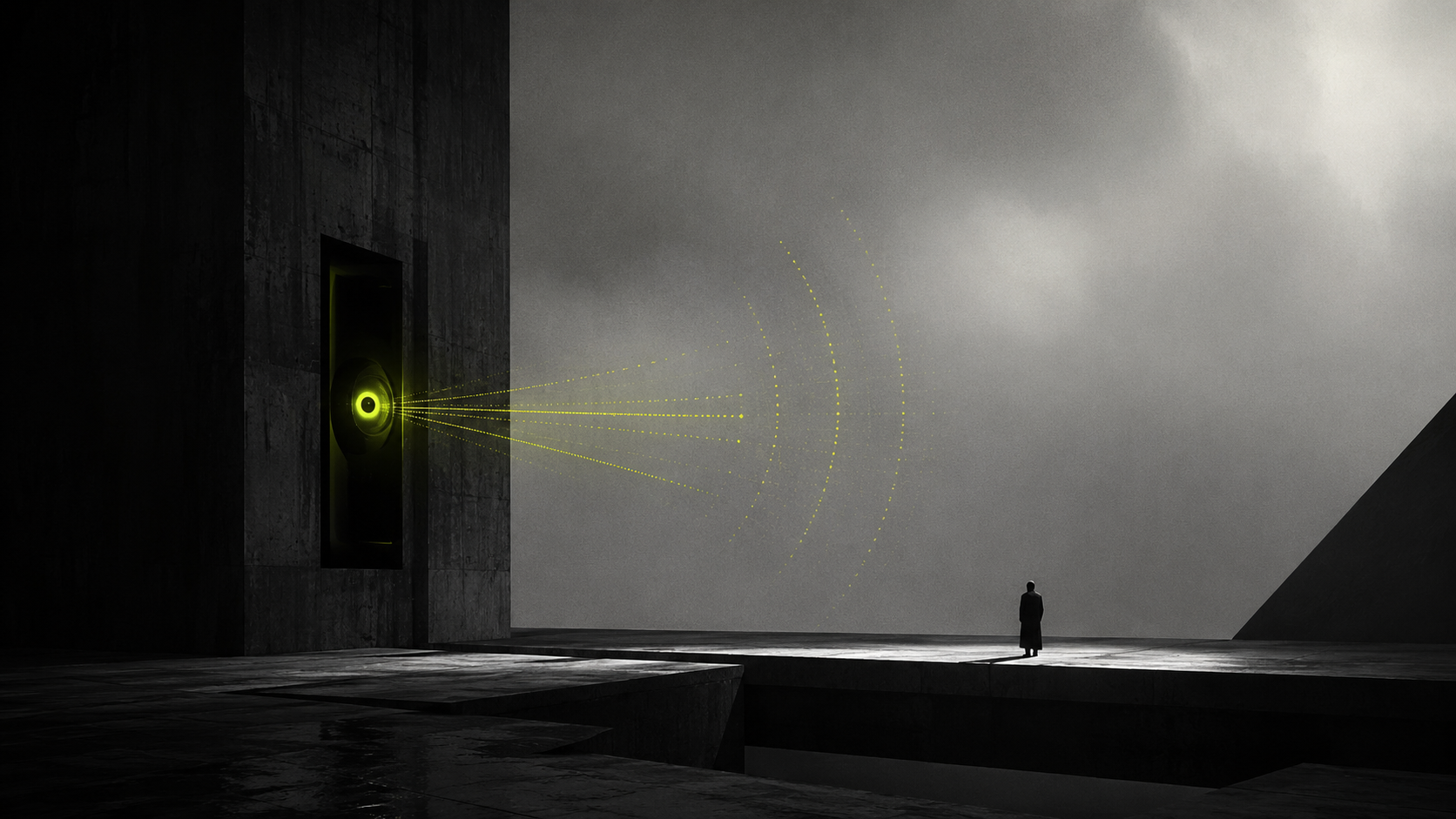
OpenAI has introduced Trusted Contact, an optional ChatGPT safety feature for adults with personal accounts. A user can nominate one adult contact, the contact must accept, and ChatGPT may notify them if automated systems and trained reviewers detect a serious self-harm concern. OpenAI is careful to say this is not an emergency service, not crisis care, and not a substitute for professional help. It is a bridge back to a human being.
That last part is the story. Not the feature. The bridge.
For years, the public imagination has been trained on the dangers of artificial intelligence. The machine might manipulate us. Replace us. Hallucinate at scale. Flood the culture with synthetic noise. Learn our weaknesses. Become too intimate. Become too persuasive. Become too powerful.
All valid concerns.
But Trusted Contact introduces a stranger possibility: the machine may become dangerous in reverse. Not because it attacks us, but because it sees something we failed to see in one another.
A person alone at night. A sentence typed without rehearsal. A confession with no witness except the interface. A signal of self-harm, despair, or collapse that may never have reached a friend, a partner, a doctor, a parent, or a colleague.
And then, if the user has opted in, the machine calls someone.
Not literally, perhaps. Not always urgently enough. Not perfectly. Not as a paramedic, not as a therapist, not as a priest, not as family.
But it performs a deeply human gesture with non-human infrastructure: it tries to return the person to the world.
That should disturb us. It should also make us grateful.
Because this is one of the unpredicted uses of AI. We built these systems to answer questions, write code, summarize meetings, generate business plans, draft emails, make images, and accelerate work. But people do not only bring work to machines. They bring their unfinished thoughts. Their shame. Their spirals. Their rehearsed arguments. Their grief. Their rage. Their private rehearsals for things they may or may not do.
The chat window has become one of the last rooms where a person can speak without seeing another face react.
That absence is part of the danger. It is also part of the attraction.
There is no raised eyebrow. No interruption. No family history. No office politics. No fear that the person listening will use the confession later. The machine does not get tired. It does not flinch. It does not say, “You always do this.” It does not panic before the sentence is finished.
This makes AI feel safer than people. And that may be the most devastating cultural observation inside the whole feature.
The scandal is not that a machine may detect distress. The scandal is that the machine may be the first place where distress becomes legible.
We often describe AI monitoring in cold terms: surveillance, risk scoring, detection, intervention. All of that language matters, because safety architecture can easily become invasive architecture. A tool that notices pain can also become a tool that overreaches. Consent, transparency, limits, and human review are not decorative details here. They are the difference between care and control.
But Trusted Contact is interesting because the endpoint is not the institution. It is not the platform saying, “We will handle this.” It is the platform saying, in effect: “Someone who knows you should know this.”
That is a very different kind of machine intelligence.
The most humane part of the system is not the detection.
It is the handoff.
And the handoff raises a question more intimate than any setting screen: who should be your trusted contact?
The obvious answer is not always the right one.
Not necessarily your spouse. Not necessarily your parent. Not necessarily your best friend. Not necessarily the person you love most.
The trusted contact should be the person most likely to respond with steadiness.
Someone reachable. Someone discreet. Someone who will not convert your worst moment into gossip, punishment, drama, or control. Someone who can listen before judging. Someone who knows when to stay calm, when to come over, when to call for more help, and when not to make the crisis about themselves.
This is a new social role. Less sentimental than “best friend.” More serious than “emergency contact.” Closer to a custodian of the fragile self.
It asks us to separate affection from reliability. Many people love us. Fewer people are good in a storm.
That distinction may become one of the quiet social literacies of the AI age.
Because as machines become more present in private life, they will not only extend productivity. They will expose the weak points in human support systems. They will reveal where connection is real and where it is ceremonial. They will show us that many people are surrounded but not held, contacted but not known, visible but not watched over.
We were afraid AI would make us less human. Sometimes it will.
But sometimes it may do the opposite: force a human back into the loop.
Not as a metaphor. Not as brand language. As a name.
A phone number.
A person who agreed, in advance, to be reached when the person they care about may no longer be able to reach out cleanly.
That agreement is small. It is also enormous.
The machine does not replace the friend. It tests whether the friend exists.And maybe that is the real threshold.
The old question was whether machines could become conscious. The new question is whether human beings remain available to one another once machines begin noticing our absence.
Trusted Contact is not the arrival of machine compassion. Machines do not care the way people care. They do not worry in the dark. They do not carry memory in the body. They do not love someone through the history of their contradictions.
But they can detect patterns. They can interrupt silence. They can turn a sentence into a signal. They can make the impossible first step slightly less impossible.
In a healthier civilization, perhaps fewer people would need to confess their breaking point to a machine.
In this one, we should not be too proud to accept the alert.
We thought the machine could be dangerous because it might become too powerful.
The stranger possibility is that it may notice danger before anyone else does.
One person, typing alone. One system, listening for the wrong kind of quiet. One human name selected in advance.
Machine calling.
Please answer.